What Are Flame Retardant Additives?
Flame retardant additives are specialty chemicals added to plastic compounds, polymers, rubber, and engineering plastics to reduce flammability and slow the spread of fire. These additives improve fire safety, help materials meet UL94 flame retardancy standards, and are widely used in automotive, electrical, electronics, construction, and industrial applications.
How Do Flame Retardant Additives Work?
Flame retardant additives work by interrupting the combustion process. They may release water, create a protective char layer, dilute combustible gases, or inhibit flame-producing chemical reactions. Advanced non-halogen flame retardants help improve fire resistance while maintaining the mechanical properties of engineering plastic compounds.
Which Flame Retardant Additive Is Best for Plastics?
The best flame retardant additive depends on the polymer type, processing conditions, and fire safety requirements. Halogen-free flame retardants such as aluminum hydroxide, magnesium hydroxide, phosphorus-based flame retardants, and intumescent flame retardants are commonly preferred for engineering plastics due to their environmental benefits and excellent fire performance.
What Is the Difference Between Fire Retardant and Flame Retardant Additives?
Flame retardant additives are designed to slow ignition and reduce flame spread, while fire retardant systems generally refer to broader fire protection solutions used in buildings, coatings, and industrial materials. In the plastics industry, the term flame retardant additives is more commonly used for polymer compounds and engineering plastics.
Are Halogen-Free Flame Retardants Safe?
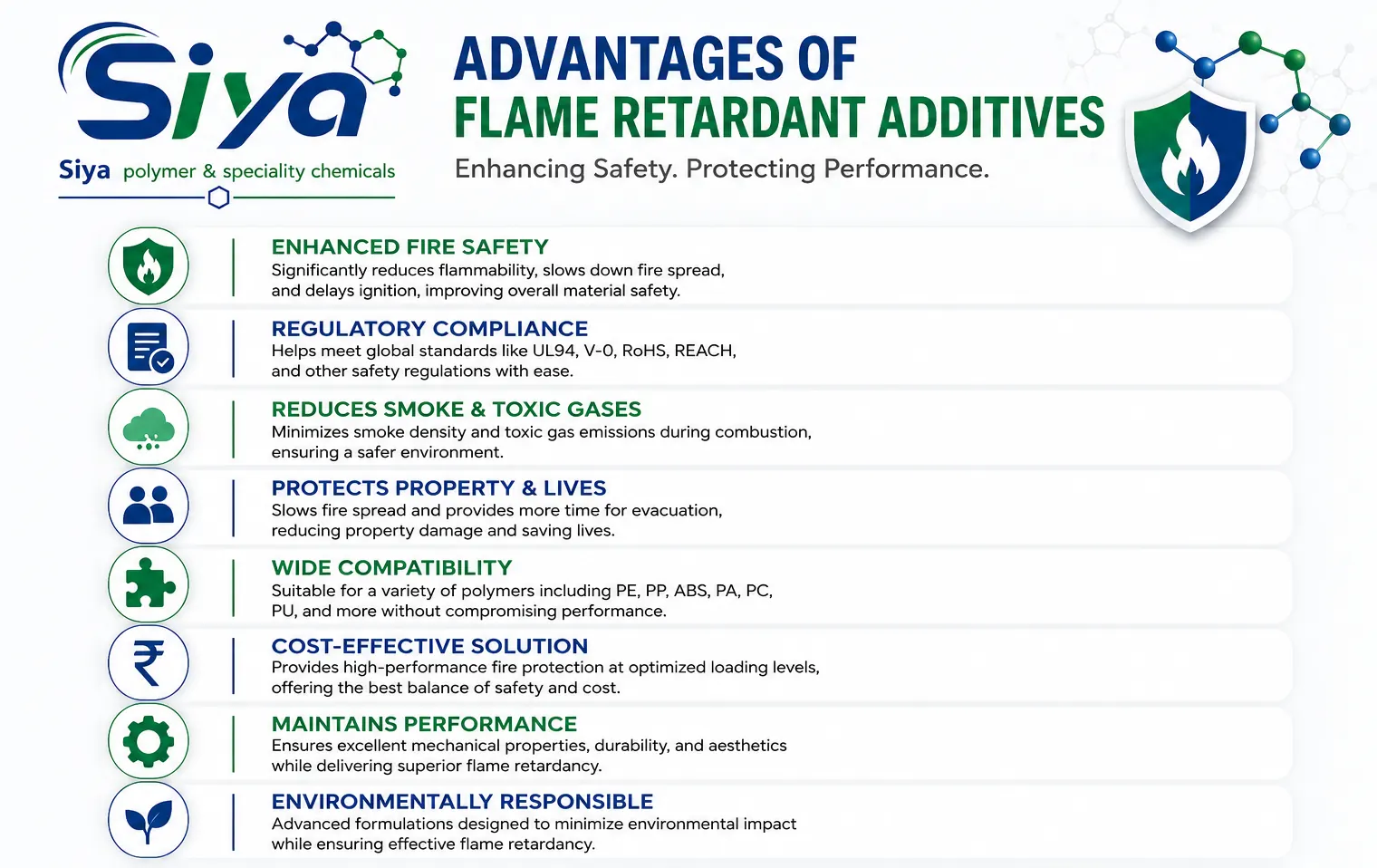
Yes. Halogen-free flame retardants are considered safer and more environmentally friendly compared to traditional halogen-based systems. They produce lower smoke emissions, reduce toxic gas generation during combustion, and comply with global regulations such as RoHS and REACH for sustainable plastic manufacturing.
Why Are Flame Retardant Additives Used in Polymers?
Flame retardant additives are used in polymers to improve fire resistance, enhance product safety, and meet international fire safety standards. They help reduce fire hazards in electrical components, automotive parts, construction materials, consumer electronics, and engineering plastic applications.
Which Industries Use Flame Retardant Additives?
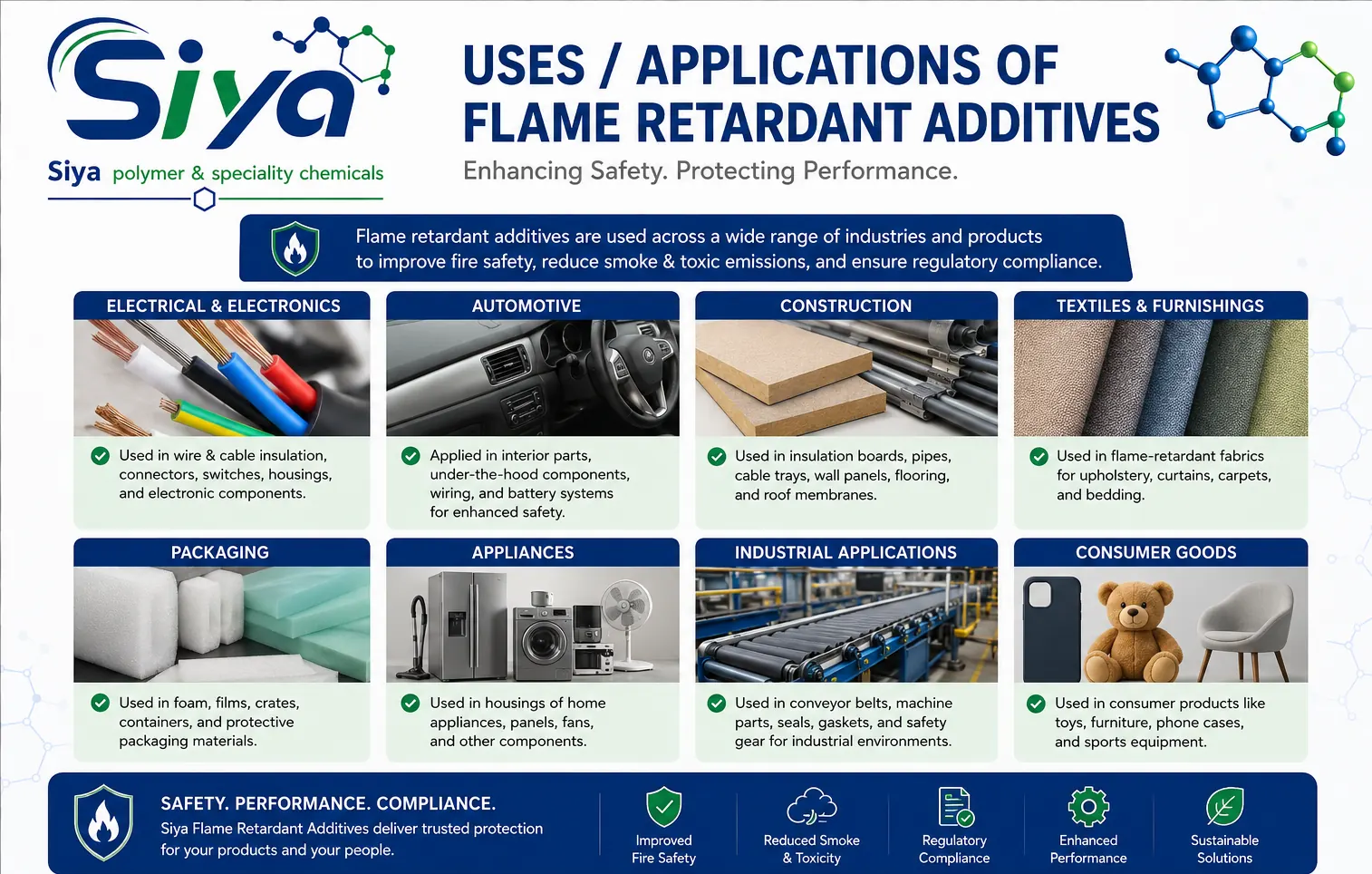
Flame retardant additives are widely used in automotive manufacturing, electrical and electronics industries, construction materials, telecommunications equipment, consumer appliances, aerospace components, cable insulation, engineering plastic compounds, and industrial applications requiring enhanced fire protection.
How to Choose Flame Retardant Additives for Plastic Manufacturing?
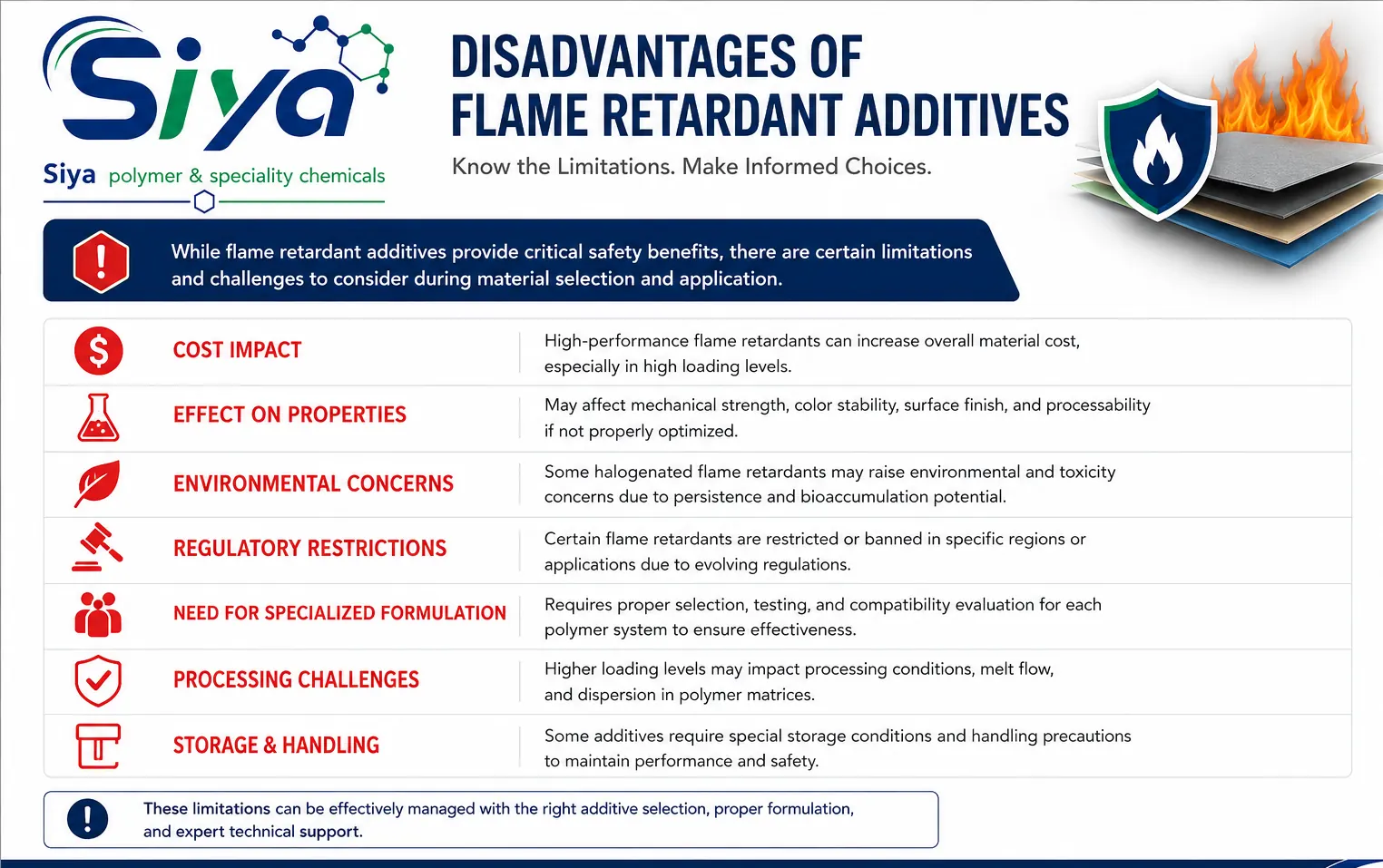
Selecting the right flame retardant additive depends on the polymer type, UL94 rating requirements, mechanical performance, processing temperature, environmental regulations, and end-use application. Manufacturers often choose phosphorus-based, nitrogen-based, mineral-based, or halogen-free flame retardant systems for engineering plastic compounds and polymer formulations.
What Are the Benefits of Flame Retardant Additives?
The key benefits of flame retardant additives include improved fire safety, reduced flame spread, lower smoke generation, compliance with fire safety regulations, enhanced product reliability, better thermal stability, and increased protection for people, equipment, and infrastructure.
What Are Non-Halogen Flame Retardants?
Non-halogen flame retardants are environmentally friendly fire protection additives that do not contain chlorine or bromine. Common examples include phosphorus-based flame retardants, aluminum hydroxide, magnesium hydroxide, zinc borate, and intumescent systems. They are widely used in sustainable engineering plastic compounds, electrical applications, and eco-friendly polymer manufacturing.