Get in touch for product inquiries, technical support, or business partnerships regarding polymer additives and specialty chemicals.
Siya Polymer & Speciality Chemicals
Flat No 306 Crown C1 Stella Apartment, Moshi, Pune
Pune, Maharashtra, India – 412105
Siya Polymer & Speciality Chemicals
Rajiv Gandhi Nagar, N2 Cidco
Chh. Sambhajinagar (Aurangabad), Maharashtra, India – 431001
Monday – Sunday: 9:00 AM – 6:00 PM
Learn everything about commodity plastics, their types, applications, recyclability, costs, and packaging uses. This FAQ guide helps manufacturers, suppliers, exporters, packaging companies, and industrial buyers understand the benefits of commodity plastic materials.
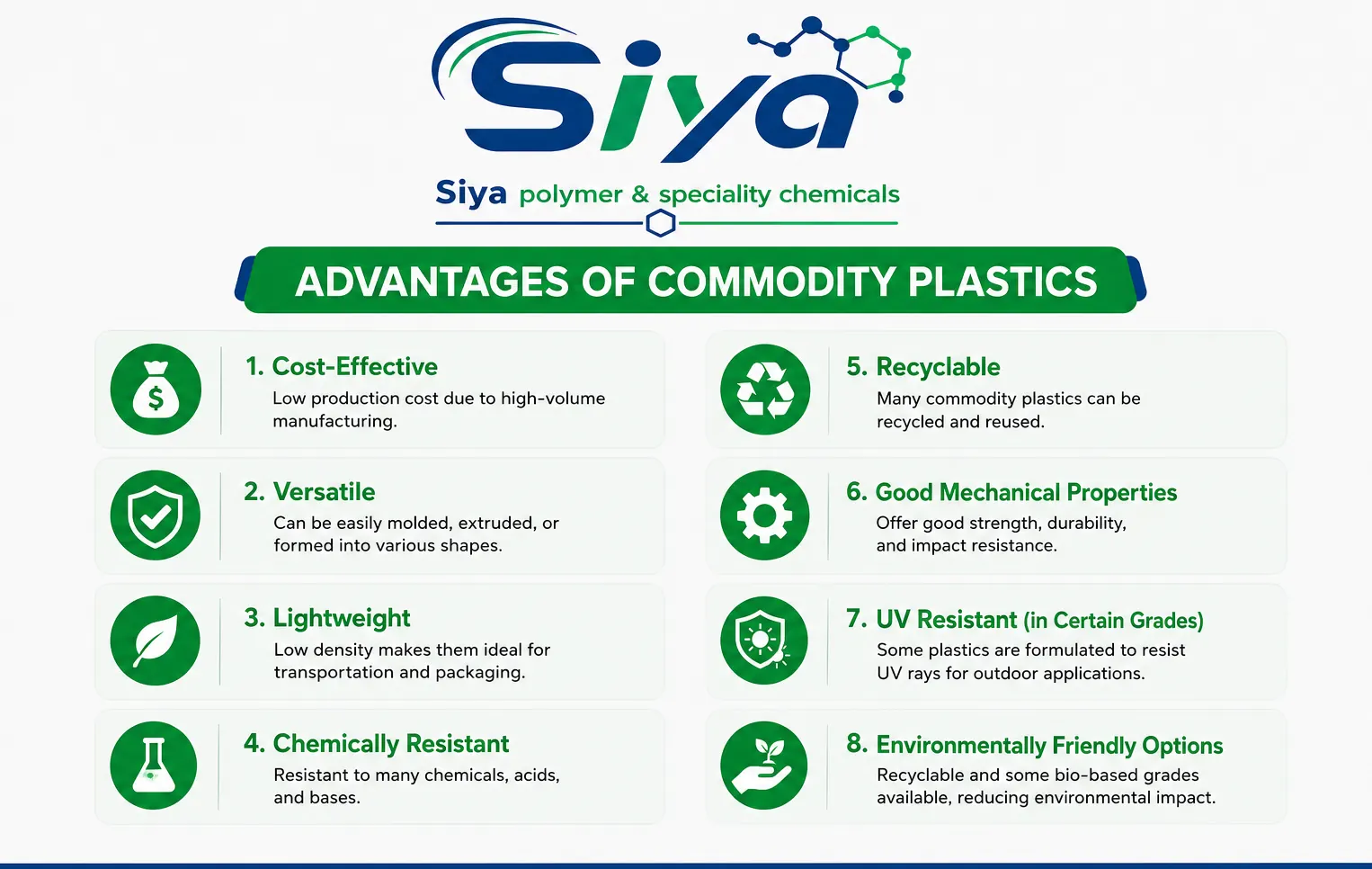
Commodity plastics are low-cost, high-volume plastic materials widely used in everyday products and industrial applications. These plastics offer good durability, flexibility, and cost-effectiveness, making them ideal for packaging, consumer goods, containers, films, and household products. Common commodity plastics include Polyethylene (PE), Polypropylene (PP), Polyvinyl Chloride (PVC), Polystyrene (PS), and Polyethylene Terephthalate (PET).
The major types of commodity plastics include:
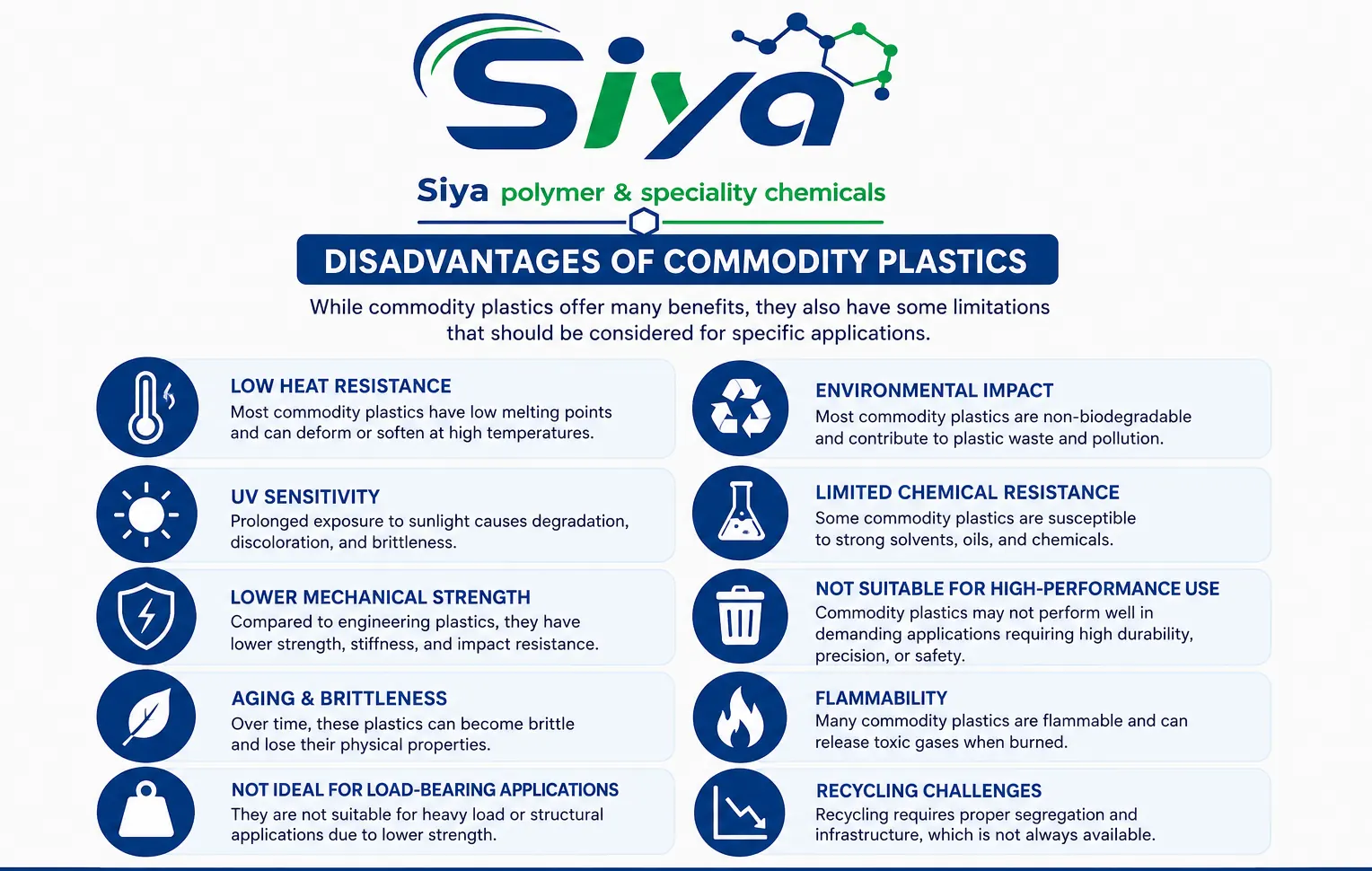
Commodity plastics are designed for high-volume production and cost-sensitive applications, while engineering plastics offer superior mechanical strength, heat resistance, and chemical resistance. Commodity plastics are commonly used in packaging and consumer products, whereas engineering plastics are preferred in automotive, aerospace, electronics, and industrial equipment.
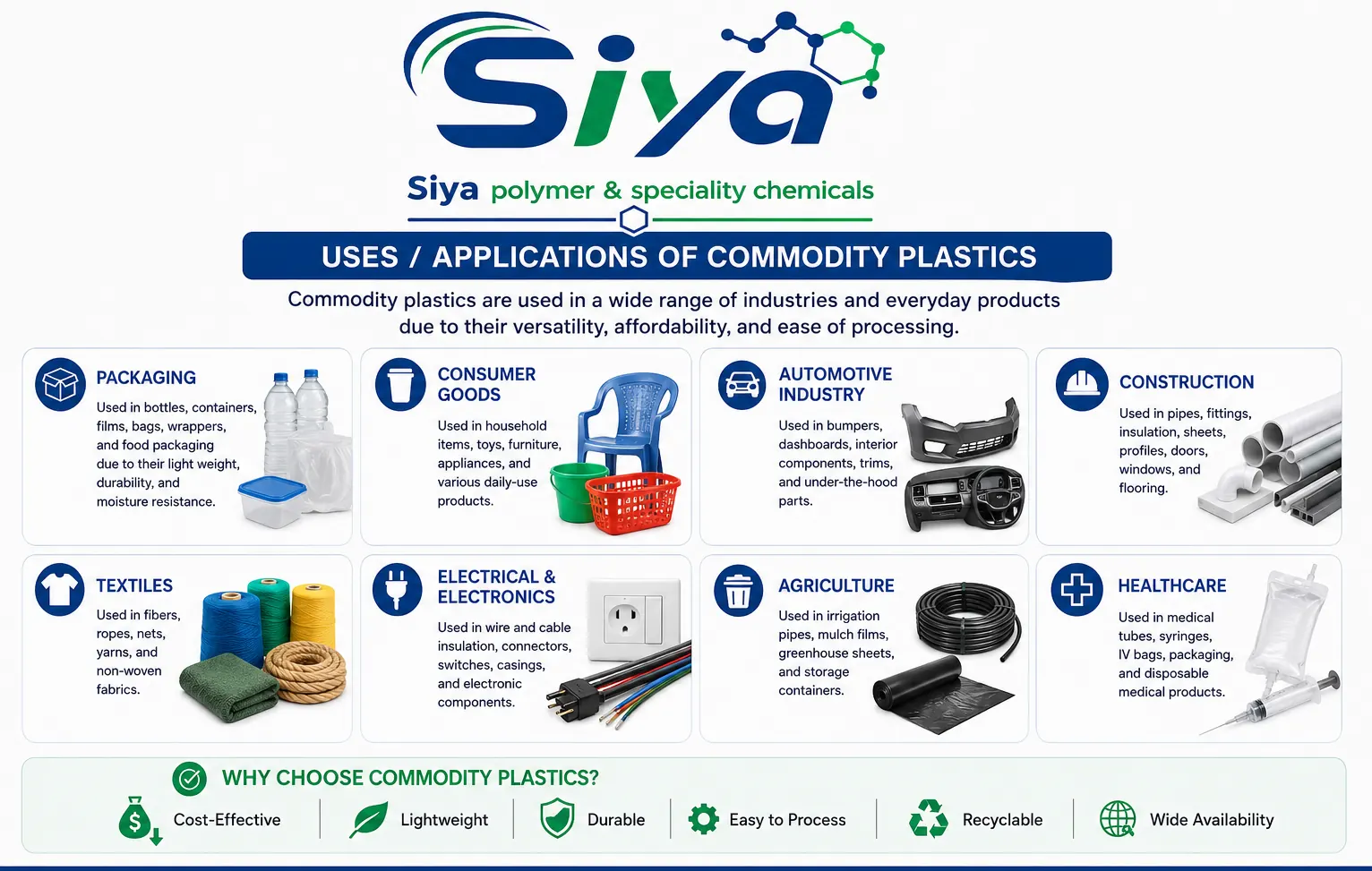
Commodity plastics are used in packaging materials, food containers, plastic bottles, films, shopping bags, toys, household goods, consumer products, construction materials, and industrial packaging. Their affordability and versatility make them suitable for mass-market applications.
Commodity plastics are widely used in:
Yes, many commodity plastics are recyclable. PET, HDPE, LDPE, PP, and PVC can often be collected, processed, and reused in manufacturing. Recycling commodity plastics helps reduce plastic waste, conserve resources, and support sustainable packaging solutions.
Commodity plastics are generally more affordable than engineering plastics. Prices vary based on resin type, raw material costs, global demand, supplier location, and market conditions. Polyethylene and Polypropylene are among the most cost-effective plastic materials for large-scale manufacturing.
The best commodity plastic for packaging depends on the application:
PET and PP are among the most widely used packaging plastics due to their strength, safety, recyclability, and cost efficiency.